

 |
 |
 |
||
| <<back to invisible stains main | ||||
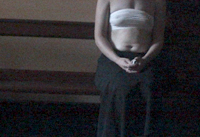
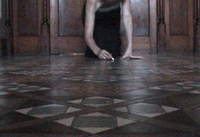
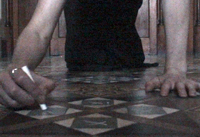
| Sitting on a church pew, amidst hushed tones a woman with bound breasts twirls a stick of chalk in her hands. Knelt on the floor she begins to draw chalk X‘s on the ornate tiles that were once meticulously scrubbed by women deemed as society‘s filth. Her marking or staining is a tribute to the many unknown and disappeared women who were once detained within the grounds of the convent building she marks. These women were forced to labour unwaged in the convent's industrial laundries in order to regain their supposed lost purity. Glimpses of religious symbolism and the building‘s architecture appear in flashes. Simultaneously, in the woodland, the same woman, now naked and heavily pregnant, digs up the soil with her bare hands. Is she attempting to unearth or bury something? Eventually covering her pregnant body in the fresh dug up soil, she brings into focus the religious ideologies that align the maternal body and its inherent reference to sex as dirty and shameful. Yet the euphoria inherent in her actions, her unabated erotic pleasure amongst the dirt counters the oppressive idealization of the maternal body, including its overt sanitization in contemporary culture.
This video performance combines footage shot in two separate locations: the site of the Waterford Magdalene Laundry ran by the Good Shepard Sisters (1842 - 1994) which now constitutes part of the Waterford Institute of Technology and also in a woodland. It responds to the sense of cultural amnesia and silence surrounding the Magdalene Laundries and questions the ongoing moral policing of female sexual and reproductive autonomy in contemporary Ireland. This work brings into view and questions the authoritarian systems and ideologies that control women through the negative essentializing of female reproductive biology. For instance, it combines imagery referential of the nature / nurture paradigm with imagery relating to the unlawful and brutal detainment of thousands of women in Ireland‘s Magdalene Laundries. |
||||